Effective risk management is crucial for any organisation in the UK. A comprehensive risk assessment checklist UK is your first step towards ensuring workplace health and safety, minimising accidents, and maintaining safety for both employees and members of the public. This guide offers a practical, compliant approach to risk assessment, helping you navigate your legal requirements and create a safer working environment.
Understanding Risk Assessment
What is a Risk Assessment?
A risk assessment is a systematic process of identifying potential hazards in your workplace that may cause harm. It involves assessing the level of risk associated with these hazards and determining what control measures are needed to control the risks and protect people. The goal is to evaluate the potential for harm and implement effective precautions.
Legal Context in the UK
In the UK, health and safety at work is governed by stringent legal requirements. The Health and Safety Executive (HSE) provides guidance and enforces regulations to ensure businesses carry out the risk assessment properly and maintain a safe premise. Understanding these legal requirements is crucial for compliance and protecting your organisation from penalties, ensuring workplace safety.
Importance of a Risk Assessment Checklist
A risk assessment checklist is essential for safety management, offering a structured approach to hazard identification and risk evaluation. It ensures all areas of potential health and safety risk are considered and helps you document your risk assessment process. Using a risk assessment checklist UK also simplifies the review process, promoting a safer, more compliant workplace.
Why Risk Assessments Matter in the UK
Health and Safety at Work etc. Act 1974
The Health and Safety at Work etc. Act 1974 forms the backbone of health and safety legislation in the UK. It places a general duty on employers to ensure the health, safety and welfare of their employees. This act requires businesses to carry out a risk assessment to identify potential hazards and implement suitable control measures, including appropriate precautions.
HSE Requirements for Businesses
The Health and Safety Executive (HSE) sets out specific requirements for businesses to manage health and safety risk effectively. This includes providing guidance on how to carry out a risk assessment, manage hazardous substances, and ensure fire safety. Businesses must adhere to HSE guidelines to avoid enforcement action and protect their workforce. Using a risk assessment template and examples can help.
Legal Responsibilities of Employers
Employers have a legal duty to protect their employees and others who might be harmed by their activities. This includes conducting regular risk assessments at work, putting in place adequate control measures, and providing information and training. Employers must also consult with safety representatives on health and safety matters and regularly review their risk assessment to ensure its effectiveness.
Risk Assessment Checklist (UK)
Hazard Identification
The first step in any risk assessment is hazard identification. Walk through your workplace and identify anything that may cause harm. For instance, common hazards include:
- Physical, chemical, biological, and ergonomic hazards.
- Manual handling tasks, machinery, hazardous substances, and potential fire risk.
Note each hazard clearly on your risk assessment checklist.
Who Might Be Harmed and How
Here’s how to determine who might be harmed by each hazard. This includes several groups of people:
- Employees
- Contractors
- Members of the public
Consider how they may cause harm – what type of accident or health problem could occur? Evaluate the potential severity of the harm. Document these findings on your health and safety risk assessment checklist to inform subsequent steps.
Risk Evaluation and Existing Controls
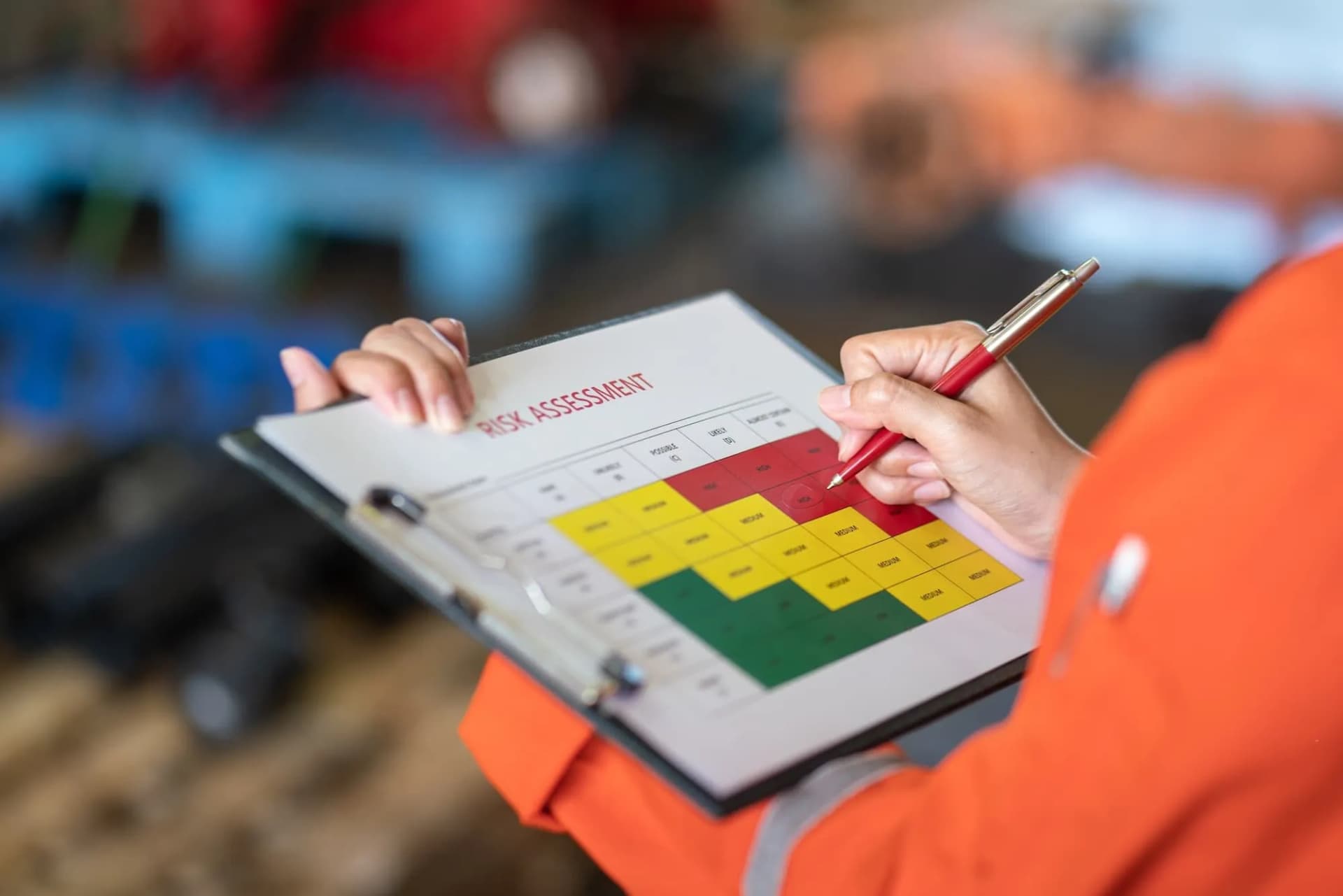
Next, assess the level of risk associated with each hazard, considering the likelihood of it occurring and the potential severity of the harm. Evaluate any existing control measures you already have in place to mitigate the risk. These precautions may take various forms, for example:
- Physical barriers
- Training
- Personal protective equipment
Note the risk level and existing controls on the risk assessment checklist.
Action Plan
Based on your risk evaluation, develop an action plan to implement further control measures to reduce the risk to an acceptable level of risk. Prioritise actions based on the severity and likelihood of harm. Assign responsibility for each action and set a timeline for completion. Document the action plan clearly on your health and safety risk assessment checklist.
Review and Revise
Risk assessment is not a one-time task. Regularly review your risk assessment to ensure it remains relevant and effective. Review it whenever there are changes in the workplace, such as new equipment or processes, or after an accident or near miss. Carry out a risk assessment and update the risk assessment checklist to reflect these changes. The HSE requires this proactive approach to safety management.
Tips for Completing Your Risk Assessment
Involve Your Team
Engage your employees in the risk assessment process. They often have valuable insights into potential hazards and effective control measures. Encourage them to identify risks and suggest improvements. Involving your team fosters a culture of health and safety and improves the accuracy and effectiveness of your risk assessment.
Tailor the Checklist to Your Setting
A generic risk assessment checklist can be a useful starting point, but it’s essential to tailor your checklist to the specific hazards and risks of your workplace. Consider the unique aspects of your premise and activities. Add or modify items on the checklist to ensure it accurately reflects the risks in your organisation, in order to control the risks.
Keep It Simple but Thorough
A risk assessment checklist should be easy to understand and use. Avoid unnecessary jargon and focus on the most significant hazards and risks. However, ensure that your risk assessment is thorough enough to identify all potential risks and appropriate control measures. Aim for a balance between simplicity and comprehensiveness in your health and safety risk assessment checklist.
Common Mistakes to Avoid
Not Reviewing Regularly
One of the most frequent errors in risk management is failing to review the risk assessment checklist periodically. The workplace is dynamic; new hazards can emerge, and existing control measures may become ineffective. The HSE recommends regular review to ensure continued health and safety, and that you continue to control the risks. Ignoring this can compromise your organisation.
Copy-Pasting Generic Templates
Using a generic risk assessment checklist without tailoring it to your specific workplace is a critical mistake. Each premise has unique hazards and risks that require individual risk assessment. While templates can be a starting point, they must be adapted to accurately identify potential risks and relevant control measures within your organisation to implement health and safety.
Ignoring Low-Probability but High-Impact Risks
It’s easy to overlook hazards with low likelihood but potentially catastrophic consequences. These “low-probability, high-impact” risks, such as major fire risk or equipment failures, should still be thoroughly evaluated and put in place adequate precautions. Failing to address them in your risk assessment could lead to severe accidents and significant damage, where someone might be harmed.
FAQs
How Often Do I Need to Do a Risk Assessment?
The frequency of risk assessment depends on your specific workplace and activities. The HSE recommends reviewing your risk assessment regularly and whenever there are significant changes, such as new equipment, processes, or after an accident. As a general rule, aim to carry out a risk assessment at least annually or more frequently if your organisation assesses high health and safety risks.
Does My Small Business Need One?
Yes, regardless of size, every business in the UK must carry out a risk assessment. The legal requirements under the Health and Safety at Work etc. Act 1974 applies to all employers. Small businesses identify hazards and risks and implement suitable control measures to protect employees and members of the public, considering all aspects of manual handling and machinery.
Can I Do It Myself or Do I Need a Consultant?
You can conduct a risk assessment yourself if you have the necessary competence and understanding of health and safety principles. However, if you lack expertise or your workplace involves complex hazards, it might be advisable to engage a qualified health and safety consultant, like Safety Management. We can provide specialist advice and help ensure compliance with HSE guidelines.
Conclusion
Importance of Compliance and Staff Safety
Maintaining workplace health and safety through effective risk management is not just a legal obligation but a moral imperative. Regularly reviewing your risk assessment and implementing necessary control measures protects your employees, reduces the likelihood of accidents, and fosters a positive work environment. A robust risk assessment checklist is vital for ensuring ongoing safety.
Resources for Further Support
For further guidance on risk assessment and workplace health and safety, consult the HSE website and publications. They provide comprehensive resources, including industry-specific advice and risk assessment template and examples. Consider seeking advice from qualified safety consultants, such as Safety Management, to ensure you meet all legal requirements for your organisation and premises.