If your workplace uses lifting equipment alongside general machinery and tools, you have almost certainly encountered both PUWER and LOLER. Both sets of regulations were introduced in 1998, both are enforced by the HSE, and both share the common goal of protecting workers from equipment-related harm. But they are not the same, and understanding the differences is essential for compliance.
Getting this wrong can leave you exposed. Assume LOLER covers everything and you may neglect your broader PUWER obligations. Focus exclusively on PUWER and you may miss the specific, more demanding requirements that LOLER places on lifting equipment. Many items of equipment — most obviously forklift trucks — fall under both regulations simultaneously.
The Fundamental Difference
PUWER applies to all work equipment. Every machine, tool, appliance, apparatus, and installation used at work falls within its scope. It is the baseline standard for equipment safety across every industry and workplace.
LOLER — the Lifting Operations and Lifting Equipment Regulations 1998 — applies specifically to lifting equipment and lifting operations. It covers cranes, hoists, lifts, forklift trucks, lifting accessories such as chains, slings, and shackles, and any other equipment used for lifting or lowering loads, including people.
Crucially, LOLER does not replace PUWER for lifting equipment. It adds to it. All lifting equipment must comply with PUWER. LOLER then imposes additional requirements that reflect the specific risks associated with lifting.
Key Differences in Practice
Inspection Requirements
PUWER requires inspections at “suitable intervals” based on risk. The frequency is not prescribed — it is determined by the employer through risk assessment. LOLER is more prescriptive: lifting equipment used to lift people must be thoroughly examined at least every six months. Other lifting equipment must be examined at least every twelve months. These are maximum intervals, and more frequent examination may be needed depending on use and conditions.
Planning and Supervision
PUWER does not have specific requirements around planning individual equipment use activities. LOLER requires that every lifting operation is properly planned by a competent person, appropriately supervised, and carried out in a safe manner. This includes consideration of the load, the location, the equipment to be used, and the conditions in which the lift will take place.
Documentation
Both regulations require records, but LOLER’s documentation requirements are more specific. Reports of thorough examination must be provided by the competent person carrying out the examination, and these must be retained and available for inspection. Equipment that fails a thorough examination must not be used until the defects are rectified.
Marking
LOLER requires that lifting equipment is clearly marked with its safe working load (SWL). This is a specific LOLER requirement that goes beyond general PUWER marking obligations.
Equipment That Falls Under Both
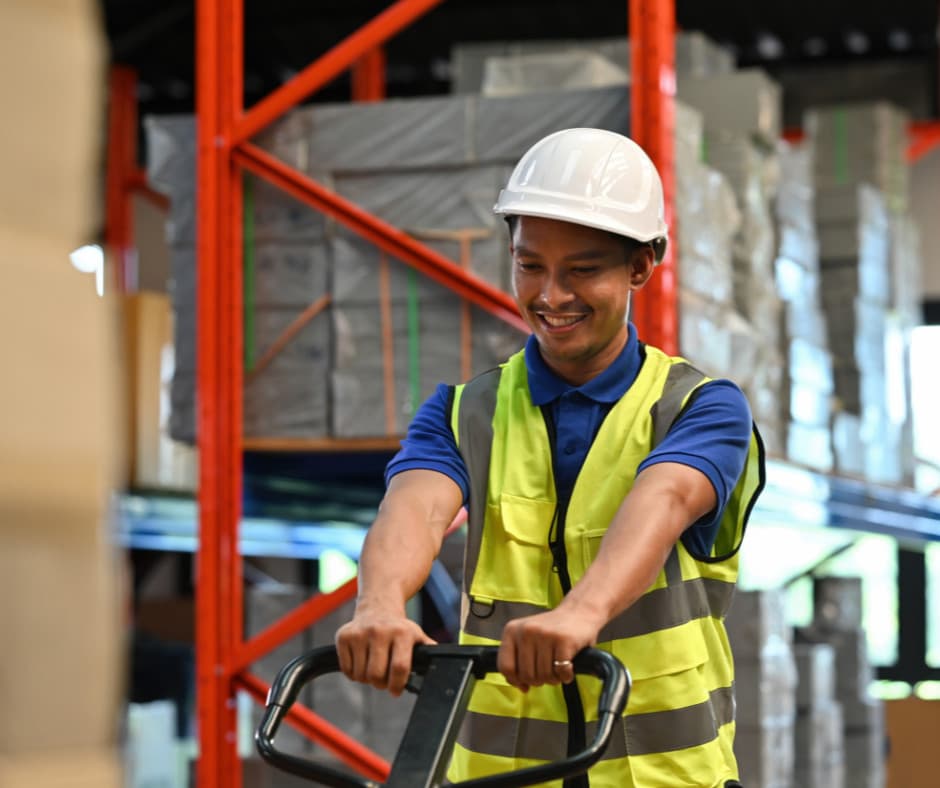
Many pieces of common workplace equipment are subject to both PUWER and LOLER. The most obvious example is the forklift truck, which must comply with PUWER for all aspects of its operation (brakes, steering, visibility, operator training, controls) and with LOLER for its lifting functions (forks, mast, chains, hydraulic system).
Other examples include vehicle tail lifts, goods hoists, overhead cranes, scissor lifts, and any mobile plant with lifting capability.
Why Getting This Right Matters
Non-compliance with either regulation carries serious consequences. But the specific and prescriptive nature of LOLER’s thorough examination requirements means that failures are particularly easy for the HSE to identify and prosecute. If your lifting equipment has not been thoroughly examined within the required intervals, the breach is clear-cut.
Equally, if you are relying on your LOLER examinations to cover PUWER obligations, you may have gaps. A LOLER thorough examination focuses on the integrity of the lifting equipment and its fitness for lifting operations. It does not necessarily cover all the broader PUWER requirements, such as general suitability, operator training, maintenance of non-lifting components, or adequacy of controls.
How Safety Management Ltd Can Help
Safety Management Ltd helps businesses understand and manage the overlap between PUWER and LOLER. We carry out comprehensive assessments that cover both sets of regulations, ensuring that every piece of equipment meets all applicable requirements. We help you establish clear inspection and examination programmes, maintain the required documentation, and ensure your operators are properly trained.