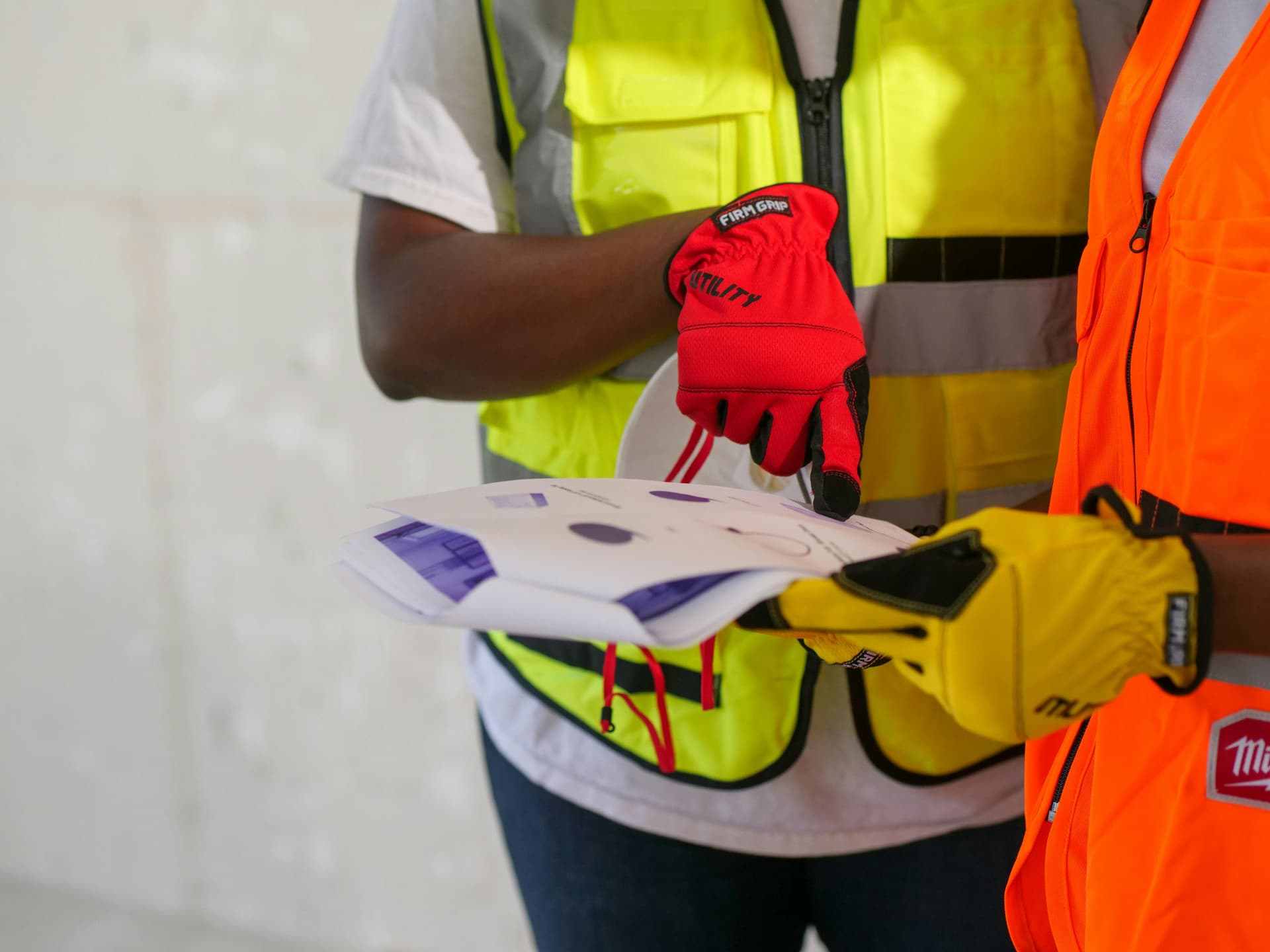

When operations directors and facilities managers think about catastrophic industrial incidents, they often picture offshore rigs or chemical refineries. In reality, the majority of industrial fires and flash explosions in the UK happen in everyday settings: automotive and engineering assembly plants, plastics moulding factories, packaging conversion lines, retail stockrooms holding aerosol stock, battery charging bays and back-of-house supermarket plant rooms.
If your facility stores, uses or generates flammable liquids, gases, vapours or combustible dusts, completing a compliant DSEAR risk assessment is a legal duty under UK health and safety law.
Many organisations nevertheless operate under a blanket of false reassurance. They assume that a few COSHH sheets on file, an extraction hood or equipment carrying an ATEX badge means their explosive atmosphere risks are controlled.
The Dangerous Substances and Explosive Atmospheres Regulations 2002 (DSEAR) require employers to assess and eliminate or control the fire, explosion and corrosion risks arising from dangerous substances. When an inspector visits, or worse when an ignition event occurs, generic paperwork will not protect your workforce, your leadership team or your operational continuity.
This guide sets out what DSEAR compliance looks like on the ground: how to identify common and process-generated triggers, where assessments routinely fail, how hazardous area zoning should work for maintenance teams, and how to avoid costly enforcement action.
What Is DSEAR and Why Does It Apply to Your Site?
DSEAR sets out the minimum legal requirements in Great Britain for protecting workers and members of the public against the risk of fires, explosions and similar energetic events caused by dangerous substances. In 2015, the scope of DSEAR was extended to include gases under pressure and substances corrosive to metals.
Under Regulation 5 of DSEAR, employers must carry out a suitable and sufficient risk assessment before any work involving a dangerous substance begins.
The regulations are not designed to generate red tape. Their objective is straightforward: prevent explosive or flammable atmospheres from forming and, where they cannot be prevented, make sure that no ignition source can come into contact with them.
When Does DSEAR Apply?
A DSEAR assessment is legally required if any of the following operational conditions exist on your premises:
- You store, pump, spray or decant flammable liquids, such as solvents, paints, adhesives, fuels, alcohols or chemical cleaners.
- You store, pipe or use flammable or compressed gases, such as LPG, acetylene, propane, methane or hydrogen.
- Your operations handle, generate, convey or collect combustible organic or metallic dusts, such as flour, sugar, starch, grain, animal feed, wood dust, plastics or aluminium powder.
- Your processes generate flammable mists or vapours as a by-product, for example vapour from open mixing vats or mists from high-pressure spraying.
- You store or process substances that are corrosive to structural metals, presenting a risk of structural collapse or loss of containment.
If any of these substances are present and could foreseeably create an explosive atmosphere in normal or abnormal conditions, DSEAR applies to your business.
Beyond the Obvious: Recognising Hidden Dusts, Vapours and Gases
One of the most frequent misconceptions among site managers is that dangerous substances only means raw chemicals marked with a red hazard diamond. In real operations, the most serious explosion risks often come from everyday organic materials or process-generated atmospheres.
The invisible hazard: combustible dusts
Many food manufacturers, agricultural processors and joinery workshops are surprised to learn that they operate high-risk DSEAR environments. When solid materials such as flour, custard powder, sugar, animal feed or wood are dispersed into the air in sufficient concentration, they form a combustible dust cloud. If an ignition source meets that cloud in an enclosed space, whether an overheated bearing on a bucket elevator, a spark from an uncertified mobile phone or a discharge of static electricity, the result is a rapid deflagration.
How a secondary explosion happens
Worse still is the secondary explosion:
- A small primary explosion occurs inside a piece of equipment such as a hammer mill or dust collector.
- The initial shockwave travels through the building, dislodging accumulated dust sitting on roof trusses, light fittings, pipework and cable trays.
- This creates a much larger secondary dust cloud through the room, which ignites milliseconds later, often levelling the building.
Process-generated vapours and liquids
Liquids with a low flash point, the lowest temperature at which they emit enough vapour to ignite, present severe risks at normal ambient factory temperatures.
Transferring solvents from an intermediate bulk container into smaller containers, washing ink rollers on a printing press or using aerosolised cleaning agents in a poorly ventilated wash bay routinely generates explosive vapour zones. Under DSEAR, keeping the liquid in an approved drum is not enough. The risk assessment must account for decanting and cleaning operations where vapours escape into the room.
The 5 Most Dangerous DSEAR Assessment Blind Spots
Over decades of conducting independent critical risk audits and DSEAR assessments across UK industry, our senior consultants repeatedly find the same fundamental oversights. These blind spots leave organisations exposed to catastrophic events and severe enforcement action.
1. The clean-looking room (dust on high surfaces)
Walk into a factory and the floor might look immaculate. Now look up at the structural I-beams, the top of the cable tray work or above the suspended ceiling tiles. If a layer of fine dust thicker than a standard paperclip, roughly 0.8mm, covers more than 5% of the floor area, your facility has the fuel loading for a fatal secondary explosion. Traditional audits rarely look upwards.
2. Ignoring foreseeable abnormal conditions
Many assessments evaluate operations only during smooth, steady-state running. Incidents rarely happen during normal operation. They happen during upset conditions:
- A pneumatic conveyor line blocks and an operator opens an inspection hatch while the blower is still charged.
- An intermediate bulk container is punctured by the fork of a forklift truck.
- Local exhaust ventilation fails or is switched off during a hot summer shift.
A compliant DSEAR assessment must evaluate how your controls perform during cleaning, maintenance, power failures and product blockages.
3. The unused 90-page document
Some external consultants produce 90-page academic reports packed with mathematical equations and verbatim extracts from European standards, but containing no clear, prioritised actions for the engineering team. An assessment that cannot be understood by a maintenance fitter or plant manager provides no practical safety control.
4. Unexplained or unconnected zoning
Some sites display hazardous area warning signs, the yellow triangular EX badge, outside doors. Yet when you ask the engineering team which Zone the room is, where the boundary ends or which equipment temperature class is permitted, nobody knows. Zoning that is not translated into clear procurement and maintenance rules is useless.
5. Inadequate contractor and hot work control
A large proportion of industrial explosion fatalities occur during non-routine maintenance. Bringing an angle grinder, welding kit or heat gun into a facility without physical isolation of dust lines, gas pipe purging or continuous gas detection is a recipe for disaster. DSEAR requires formal permit-to-work systems for all non-routine work in or near zoned areas.
Hazardous Area Classification (Zoning) Explained in Plain English
Under Regulation 7 and Schedule 2 of DSEAR, places where explosive atmospheres may occur must be classified into hazardous zones based on the frequency and duration of the explosive atmosphere.
The purpose of zoning is practical: it determines which equipment, both electrical and mechanical, is legally permitted inside that area to prevent sparks, arcs or hot surfaces from causing an explosion.
Why zoning matters to operations and procurement
Zoning is not a theoretical exercise. It dictates everyday maintenance and capital purchasing:
- Equipment selection (UKCA and ATEX). If a room is classified as Zone 21 for combustible aluminium and light alloy dust, you cannot install a standard domestic light switch, use a non-certified vacuum cleaner or introduce a conventional electric pallet truck. Equipment must be formally certified (Equipment Category 2D) to prevent surface temperatures exceeding the auto-ignition point of the dust layer.
- Maintenance verification. Every piece of equipment in a hazardous zone must be inspected and maintained by competent people. A loose terminal block in a Zone 1 solvent store can produce an electric arc that triggers a fire.
- Reducing zone sizes through engineering. A good DSEAR assessment does not just draw large circles on a plan. It shows how to shrink or eliminate zones. By improving local exhaust ventilation, introducing closed-loop transfer hoses or upgrading dust extraction, a Zone 21 area can often be downgraded to Zone 22 or de-zoned entirely, saving tens of thousands of pounds in specialist equipment.
The Real Cost of Non-Compliance: Downtime, Insurers and HSE Enforcement
Many business leaders assume that falling short on DSEAR means an administrative slap on the wrist or an HSE Fee for Intervention charge. The commercial exposure is far more severe, and breaks down into three tangible impacts.
1. Operational downtime and HSE prohibition
When an HSE inspector finds uncontrolled ignition risks in an explosive atmosphere, they will not issue an advisory note. They will issue an immediate Prohibition Notice.
A Prohibition Notice legally shuts down that specific line, process or entire building with immediate effect. It cannot reopen until an independent DSEAR assessment has been carried out, equipment has been verified and safe operating procedures have been signed off. For a high-throughput manufacturing plant or logistics hub, several weeks of forced downtime can mean millions in lost production and contractual penalties.
2. Insurance voidance and scrutiny
Following an industrial fire or flash event, forensic loss adjusters investigate the root cause immediately. One of the first documents the insurer asks for is the site's DSEAR risk assessment, together with proof that equipment in hazardous areas has been verified.
If your DSEAR assessment does not exist, is out of date or failed to address the process where the fire started, insurers may reduce payouts or repudiate the claim entirely on the grounds of non-compliance with statutory safety warranties.
3. Personal liability for directors
Under UK law, breaches of DSEAR fall under the Health and Safety at Work etc. Act 1974. Under Section 37, if an offence is proven to have been committed with the consent, connivance or neglect of a director, manager or similar officer, that individual can be prosecuted personally. Sentencing Council guidelines calculate fines from organisation turnover, so penalties regularly reach six or seven figures.
Conclusion: Turning DSEAR Into Practical Operational Safety
DSEAR compliance is not achieved by producing a large academic binder that gathers dust on an office shelf. It is achieved on the factory floor, in the warehouse aisle and in the maintenance workshop, through clear understanding, proportionate physical controls and disciplined maintenance.
At Safety Management Limited, our approach to DSEAR risk assessments is built around operational reality. Our senior consultants bring over 30 years of hands-on industrial experience across manufacturing, milling, engineering and logistics.
We do not deliver unreadable 90-page documents. We provide:
- Pragmatic, plain-English evaluations that identify your genuine fire and explosion risks.
- Practical Hazardous Area Classification maps that your maintenance and engineering teams can actually use.
- Sensible engineering recommendations designed to shrink hazardous zones and reduce capital equipment costs.
- Actionable, trackable improvement plans in SML Connect, so you can demonstrate live compliance and real risk reduction to board members, insurers and enforcing authorities.
Frequently Asked Questions About DSEAR Compliance
How often does a DSEAR risk assessment need to be reviewed?
DSEAR assessments are not a one-off exercise. Under Regulation 5, your assessment must be reviewed immediately if there is reason to suspect it is no longer valid, or if significant changes occur. Good industry practice is a formal review at least every three to five years, or immediately after an incident, near miss, process modification, introduction of new materials or facility expansion.
What is the difference between ATEX and DSEAR?
DSEAR is the UK statutory regulation that places duties on employers to manage explosive atmosphere risks in the workplace. ATEX refers to two European directives: ATEX 137, covering workplace safety and transposed into UK law through DSEAR, and ATEX 95, which covers the product standards used to design and certify equipment for explosive atmospheres. In Great Britain, equipment for explosive atmospheres is now certified under the UKCA regime (UKEX), although existing ATEX-marked equipment remains widely used. You can read more in our guide to DSEAR versus ATEX.
Can common materials like wood dust or MDF really cause an industrial explosion?
Yes. In finely divided form, timber and MDF dusts have an immense surface-to-volume ratio. When suspended in the air within a confined space, such as an extraction duct, a cyclonic filter or an unventilated sanding bay, and at concentrations between the lower and upper explosive limits, they ignite violently if exposed to a spark, hot bearing or electrical fault. Historical incidents in UK woodworking and joinery plants show that combustible wood dust deflagrations can generate blast pressures above 8 to 10 bar, enough to blow out reinforced cladding and cause structural collapse.
Does a small business or single-depot warehouse need a DSEAR assessment?
Yes. DSEAR applies to every employer, regardless of company size. If you operate an LPG cylinder storage cage for forklift trucks, decant paint thinners in a workshop or handle combustible packaging waste, you are legally required to assess and control those risks. The depth of the assessment should be proportionate to the scale and complexity of the hazard.
What should I prepare before an external DSEAR consultant visits site?
To get the most from an assessment, gather your dangerous substance inventory, current safety data sheets, mechanical extraction and LEV test certificates, site layout drawings, hazardous equipment registers and hot work or permit-to-work procedures. If you are unsure where to begin, SML provides a short scoping review to identify exactly what is needed before work starts.
Is your site fully protected against explosive atmosphere risks?
Take the guesswork out of fire, vapour and combustible dust compliance with a practical, plain-English DSEAR assessment. Book a DSEAR consultation with our specialist team or call +44 (0)1327 311300 to discuss your operation. You can also read what inspectors look for during a DSEAR assessment.